Do you champion Harry Potter or Lord Voldemort?

Hi friends, this piece is inspired by the Unbreakable trilogy I’ve recently watched with my family. It was a fun albeit tiring piece to write- I was literally firing on all cylinders working on this one. So grab your blankets and popcorn because, the plot thickens…
Okay, intermission sorry. “Sometimes music feels liquid, it takes on both the shape and essence of the space in which it is experienced, and that is where it will live forever in one’s memory,” said Burg. This song is about the unique power music has to be a ‘moment freezer’- their ability to be shape-shifters, taking the form of your living room, that is your space. The chords, the riff, the drums, the vocals- Channel Orange in your Living Room is a true masterpiece. This is a concept I have great relish for as I always associate songs with my travels around the world 🙂
PS: Channel orange is a studio album of Frank Ocean. So Burg is talking about listening to them songs in his own living room, music-ception…
You either die a hero, or you live long enough to see yourself become the villain.
In literary works, a hero is somebody who is admired and emulated. Due to this reason, the hero always exemplifies the embodiment of the ideals of the creating culture. The evolving social conditions of different times shape the ideals of every culture, leading to different attributes being valued. To a certain degree, cultural values are hence reflected in both the actions of heroes and their motivations.
With every hero, there has to be a villainous counterpart. Where would our stories be without these contrasting shades of light and dark?
Literary Darwinism, a branch of literary criticism, attempts to shed light on this topic, viewing fiction through the lens of evolutionary theory. Stories, works of literature and movies are, its proponents argue, a sort of surrogate experience. They act as a simulation that allows us to push the boundaries and challenge circumstances that threaten our survival. Never mind that the battles are being fought on a distant planet, never mind that the action of the tales are being played out in a School of Witchcraft and Wizardry. Regardless of the conditions, our heroes offer us different perspectives on a multitude of scenarios, licensing our future behaviour that is ever so often modified and adapted towards their altruistic personas. A well-constructed hero should thus allow us to travel the world in their shoes, picking up salient life lessons along the way.
The ‘good versus evil’ theme has withstood the test of time, and the entertainment industry of today has capitalised on that fact. People as it seems, have always yearned for a saving hero.
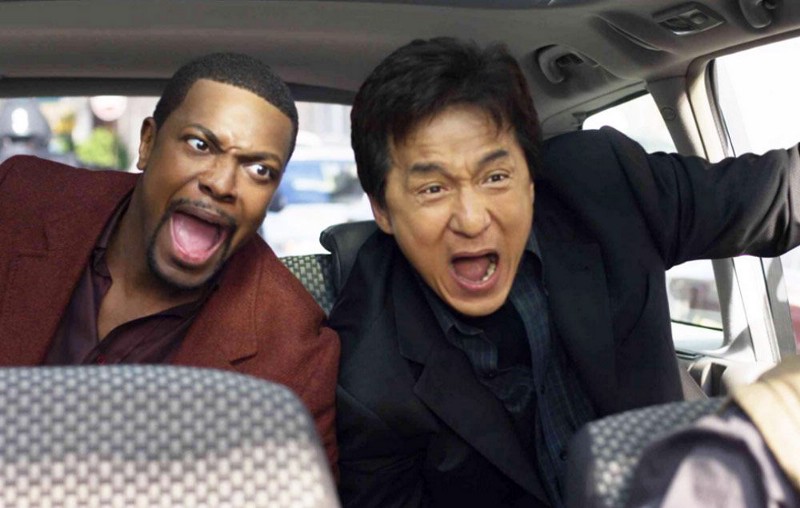
Heroes are uncomplicated and easy. They save people and commit selfless acts. They come in a plethora of forms, be it being donned with a cape, the ability to conjure up invisible shields, or simply being well-versed in Wu-Shu and good friends with Chris Tucker (Jackie Chan is my personal hero so, scurry along.) The real ones would’ve gotten the Rush Hour reference…Everybody wants some Kungfu fighting.
The most important thing is that heroes understand the human condition and work towards its betterment. They are steered by compassion. The heritage of heroism is old and primordial. Throughout history, there have been many champions of and for the people. America’s Martin Luther King, India’s Gandhi, and Germany’s Sophia Magdalena Schol are a few who come to mind. The Grecian tradition of heroism created mythological characters like Achilles who in turn built the foundation for how heroes should carry themselves. This legacy reverberates in the expectations we hold for the characters in the Marvel and DC universes, to the people in our history textbooks.

Villains however, are more nuanced. The dark doubles are there to unshackle all the good done by the hero. Lex Luthor believed Superman was a threat to all of Mankind, but to what end? Did he have a divisive agenda crafted for his own means? Or was he protecting people from an extraterrestrial threat? There exists the camp that agrees with Luthor. To every popular opinion, there is a minority faction that aims to nullify the championed idea of what is right.
In this light, fictional heroes should represent the most effective survival game plan, with villains acting as the brilliant manifestations of the real dangers we face. A prime example would be the distinct similarities we can draw between Lord Voldemort from Harry Potter, and Adolf Hitler of Nazi Germany. Fictionally, we have Lord Voldemort who’s a pureblood supremacist. He believed that purebloods are superior to half-bloods or muggleborns. He was also a wizard supremacist and believed that the wizardkind should rule over the non-magical people. He was driven more by his own thirst for power than by any ideology.
Realistically, we have Adolf Hitler the Führer of Nazi Germany. Hitler was a racist who fervently believed that people could and should be separated into a hierarchy of different races. He believed the German race to be the superior race, and called them ‘Aryan’. He considered Jews to be inferior and were particularly destructive to the German ‘Aryan’ race. Hitler also wanted to rid Germany of the disabled, homosexuals, Roma and Sinti, and other minorities that did not fit into his warped idea of an Aryan race.
That should do it. Literary darwinism is not such a radical idea after all, taking into account that stories are the products of human minds forged in the crucible of natural selection. It’s natural that they reflect the psychological tendencies that have allowed us to thrive and survive. Bearing in mind the psychology of altruism, most stories therefore portray characters who are recompensed for their unostentatious betterment of society- as opposed to supplementing their own fortunes. Think Harry Potter or Frodo Baggins.
The vision of life then comes full circle- from optimism to pessimism and back to optimism again. Death is often associated with greatness. Heroes benefit from the death positivity bias due to the exceptional altruism they have showcased. This is hence a wonderfully popularised trope in fiction- from Obi Wan Kenobi’s death in Star Wars to Jack Dawson’s selfless sacrifice in Titanic. Yet, fiction parallels facts. The Chernobyl Three and Rick Rescorla, amongst many others, highlight that. Ahh…The heroic sacrifice. Where to Miss? To the stars…
In this vein, my brain really is switching off right now…hightailing right out of here, peace!
Alexander SR Pang
 ALEXANDER SR PANG