Draw me like one of your French Girls
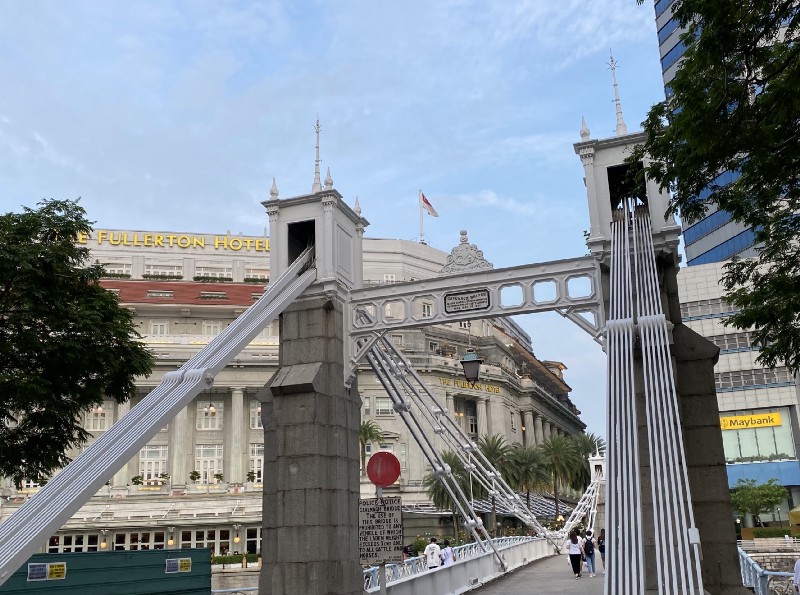
Hey folks, today my country goes into Phase 2 (Heightened), aka lockdown 2.0. Draconian maybe, but absolutely necessary. With all the healthcare and political quagmire, hopefully this piece arrives at a timely moment and takes a slight edge off all of your frustrations! This week we dissect and discuss art, along with it’s many intricacies. Food for thought: Angel Hair Capellini or Pici Cacio e Pepe? Hold on to that.
Romeo & Juliet is a love song by the ever so charismatic Peter McPoland. It is written from the boyfriend’s perspective, dealing with the emotions of young love and couples growing up together. His melancholic voice and powerful lyrics is really making me feel something again. McPoland is the kind of musician who makes me want to dance in the kitchen at 2am…
I chose this tune as the curated song for this piece because of the title. Romeo and Juliet is a tragedy written by Shakespeare, and plays around the doomed romance between two star-crossed lovers. The play, one so deeply analysed in literature, is a true art form that tells a story through the themes it develops for the audience.
Art, it’s complex. Yet, it is so straightforward.
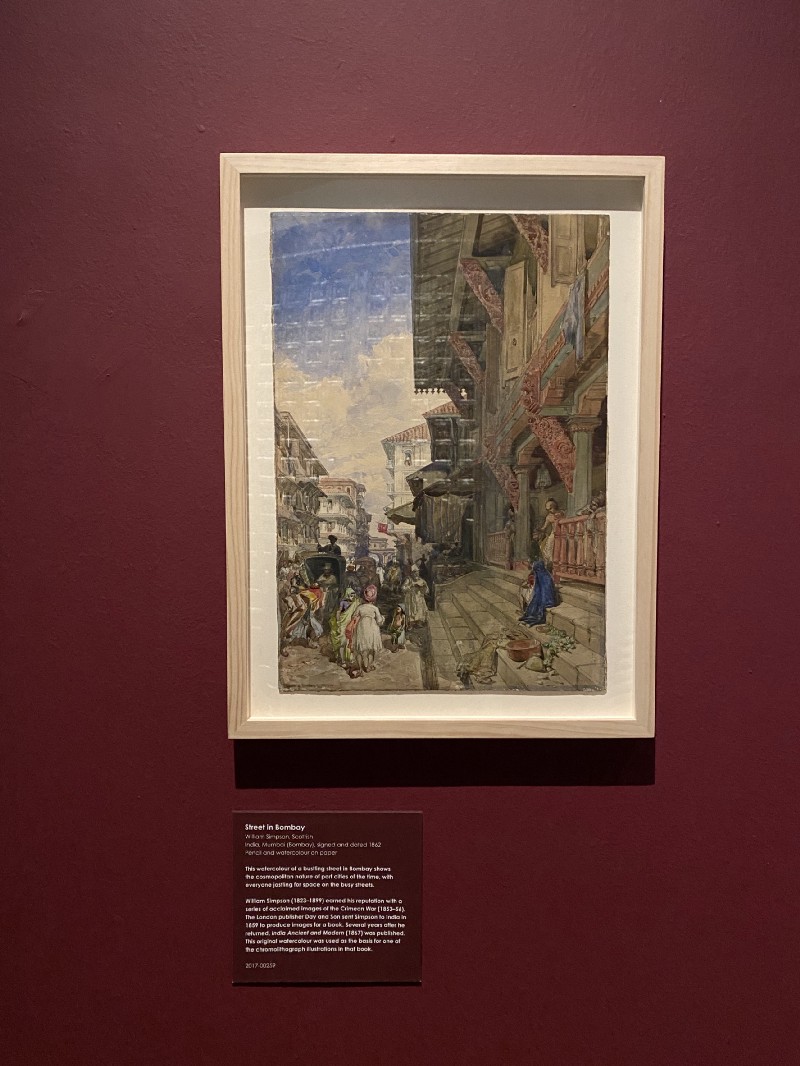
This piece really hit. Admiring the vivid watercolours illustrating a street teeming with people from the perspective of a standstill world, I had a vehement reaction innately. I wouldn’t go as far as saying I miss having to elbow my way through crowds, heck no. It’s the notion of it that I miss so much. Of course, that is but the old normal. The pin drop silence and emptiness of the museum enhanced all of such sensations, perhaps even paralleling this abyss we so often find ourselves in these days.
That’s the immense power art holds. A picture is worth a thousand words. The raw emotions and vigorous sentiments art is able to evoke in oneself is quite revitalising. It’s a culture that lends itself to purpose, fulfillment and enjoyment. Art can serve as a canvas to depict, a loudspeaker to amplify, a vessel to express. There is always beauty within.
“What do you think is the most interesting animal in an art piece?” I posed to my friend, failing to anticipate the bizarreness of what she then went on to show me. She’d really caught me unawares. “Do you know Goya?”
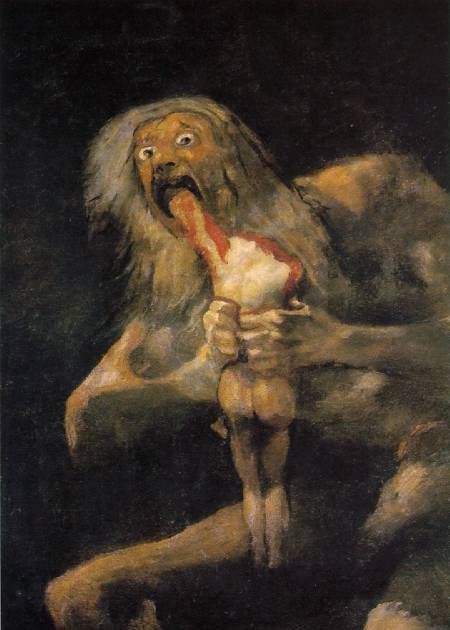
Ghastly image I know, I too had to do a double take. Well, not an animal in the strictest sense, but with such animalistic behaviour being displayed here, I reckoned this was a fair answer.
Saturno devorando a su hijo, or Saturn Devouring His Son, was painted by Francisco Goya, one of the most important Spanish artists of the late 18th century. It’s interesting to note that he was a romantic painter, but transitioned from portraying cheerfulness and merriness in his paintings, etchings and frescoes, to expressing deep pessimism and searchings.
The painting depicts the Titan Cronus (Romanised to the titular Saturn; Cronus was identified in classical antiquity with the Roman deity Saturn), from Greek mythology, eating each of his newborns upon birth due to the fear of being overthrown by one of them. Call it Dark Romanticism shall we, a manifestation of the irrational, demonic and grotesque. The painting is a personification of the human feeling of fear, or the fear of losing one’s power rather. The fear of losing power corrupts those who wield it. It’s eerie, but there are many thematic undertones in play here. It speaks of Man’s need to initiate behavioural responses to retain and capitalise on benefits bestowed upon them when they’re in power, for fear of losing them. This fear hence makes powerful people engage in a self-serving manner. A cardinal factor of the push for power is fear, and this hankering for power is to eradicate said fear. Psychology majors, that one’s for you.
Saturno devorando a su hijo is one of 14 Pinturas negras (Black Paintings) Goya painted as murals in la Quinta del Sordo (Deaf Man’s Villa), his two-storey house just outside of Madrid, anywhere between 1819 and 1823. In la Quinta, there were no restraints on the brushstroke as Goya expressed himself with great liberty. The creations are known as Black Paintings because he used so many dark pigments and blacks in them, and also because of their grave subject matter. They portray messianic and soul-stirring themes, reflective of both Goya’s fear of insanity and his bleak outlook of humanity. The murals were later hacked off in 1873, and attached to canvas by Baron Frédéric Émile d’Erlanger. The works now reside in Museo Nacional del Prado in central Madrid.
Geez, mine is a Heron.
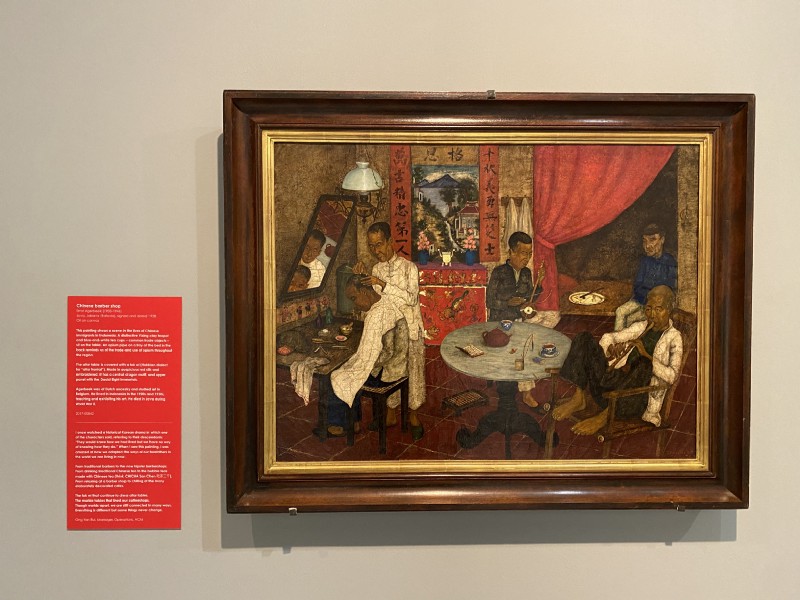
Everything is different, yet some things never change. Here we see Chinese immigrants lounging in a traditional barbershop. Music, tea and opium, ahh the highlife for the average Joe back in the day. Today we’ve got Spotify, milk tea and alcohol. The modern day decadence eh?
This speaks to me about shared cultures. Groups of people are able to click and bond together because of the shared culture they have formed. Birds of a feather flock together. Similarities in values, aspirations and thinkings are what connects people, allowing for a deeper fellowship to be forged. And while some are intrinsic, there comes the topic of nature vs nurture. Kinship has to be nurtured one conversation at a time, one shared experience at a time. Lying deep within this connection is hence this organic cultivation of common values and cultures.
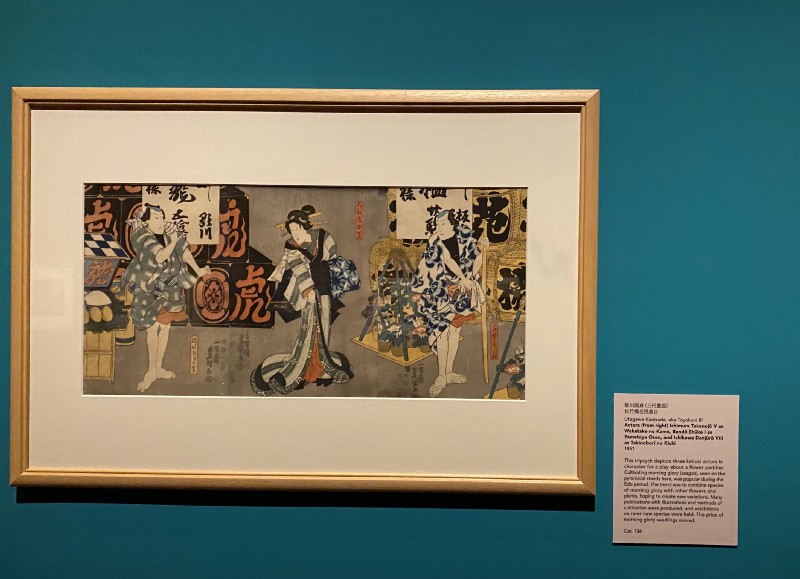
This triptych is part of the special exhibition- Life In Edo, and illustrates three kabuki actors in character for a play about a flower peddler, in the Edo Period (1603–1868). It was an age of social restrictions in Japan. There were authoritarian rules regulating the dressing, hairstyles and use of cosmetics according to social class, occupation, regional background and marital status. Through fashion and makeup however, men and women alike, were still able to express their identity and individuality. Good vibes only.
At the start of the museum tour, my mate was telling me about how she identifies different eras through the hairstyles of the people in their times. That was refreshing because through this exhibition, we learnt that changes in women’s hairstyles reflected their own ideas of beauty. From the Heian Period (794–1185), long black hair was essential for Japanese women, and was integral in assessing feminine beauty. Before Edo, women’s hairstyles were either long and unbound or tied loosely at the back. During Edo, hundreds of varying styles were born, forever changing the Japanese standard of beauty. Reminds me of this video I watched years back.
A work of art is a trace of a magnificent struggle. Art and literature have played a big part in my life, and even more so in the past year as I delved into the space of conscious observance and learning, to the ravine of unconscious admiration and longing. I have nature, art and poetry. And if that is not enough, what is?
About the pasta- you’ll be glad to know I’m team Angel Hair Capellini. Alright, back to skribblio nights and morning walks it is!
Alexander SR Pang
 ALEXANDER SR PANG